

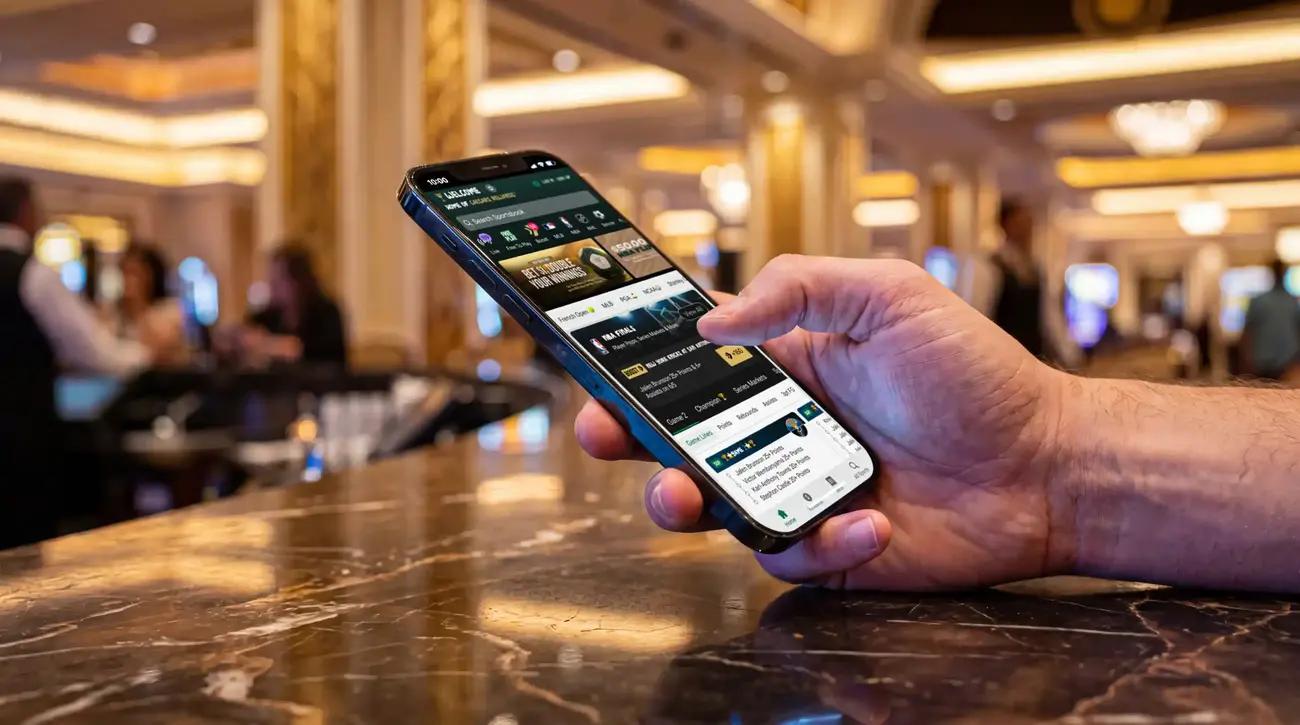
Caesars Palace turned 60 this year. Sixty. That’s a property that opened its doors back when Sinatra was still headlining showrooms on the Strip, and it’s still standing, still packed, still the first name most people think of when someone says “Vegas casino.”
I’ve walked that casino floor twice. Both times I remember the same thing before anything else: the noise. Slot machines chiming in six different keys at once, a pit boss calling a table, someone whooping three rows over because a shoe just turned in their favor. Add the free drinks circulating on trays, the high-limit room tucked behind velvet rope, and you’ve got the exact formula that’s kept this resort relevant since 1966.
Most of us don’t have a flight to McCarran booked this quarter, though. Rent’s due, the car needs brakes, and a weekend in Nevada isn’t happening. That’s exactly the gap the industry has been racing to close, and it’s why so many readers now start hunting for mobile casino games worth playing from their own couch instead of a hotel room on Las Vegas Boulevard.
The Strip Noticed Its Own Lobby Emptying
Here’s the thing casino executives won’t say out loud in a press release, but will say in an earnings call. Foot traffic on a casino floor is expensive to maintain and impossible to scale. You can only fit so many slot machines in a building, and every square foot of carpet costs money whether or not anyone’s sitting at that machine.
Mobile solves the scaling problem entirely. A resort’s own app, or a licensed real-money mobile casino, can serve ten thousand players simultaneously with zero additional floor space. Sensor Tower’s 2025 mobile gaming report tracked continued growth in both revenue and average session length across casino-style mobile titles, a trend operators have clearly read as a green light rather than a threat to their physical floors.
Caesars isn’t alone in leaning into this. A few miles up the Strip, Resorts World Las Vegas has built its entire guest strategy around a mobile-first concierge and gaming layer, letting guests check room status, order drinks, and access loyalty perks without flagging down staff. It’s a small shift on paper. It’s a total rewrite of what a “casino visit” even means in practice.
What Actually Transfers From the Floor to the Phone
Not everything survives the jump from a physical casino to a six-inch screen. The smell of a Vegas casino floor doesn’t translate. Neither does the free espresso a floor host brings you at 2am because you’ve been playing baccarat for four hours straight.
What does transfer, and transfers well, is the game selection itself. Blackjack variants, video poker paytables, and slot titles with the same math models running behind them. RTP is RTP whether you’re pulling a physical lever or tapping glass. A 96.5% return slot behaves identically on a phone screen as it does on a cabinet at the Colosseum.
Comps transfer too, just differently. Instead of a pit boss rating your play and comping a steak dinner, mobile platforms track wagering and issue tiered loyalty points automatically. I’ve had a mobile account flag me for a free spins bundle after three sessions, no human involved. Faster, less personal, still real value.
Where the Experience Actually Breaks Down
I won’t pretend it’s seamless. My own account verification on one app got stuck for two days because the passport photo I uploaded had a glare across the corner. Support was slow to respond on a Sunday. That’s the kind of friction that doesn’t show up in a marketing email but absolutely shows up in real use.
Withdrawal speed also varies more than people expect. Some platforms clear in minutes. Others sit in a “pending review” queue for 48 hours with zero explanation. If you’re used to cashing out chips at a cage the second you walk away from a table, that wait feels strange the first time.
The Money Behind the Shift
Vegas isn’t guessing here. The American Gaming Association’s 2025 State of the States report documented commercial gaming revenue climbing again, with digital and iGaming channels representing an increasingly large share of that growth compared to traditional floor revenue. When the数据 backs up a trend that clearly, operators build product roadmaps around it, not marketing slogans.
Caesars Entertainment has said as much in its own investor materials over the past two years, treating its digital arm less like a side project and more like a second casino floor that never closes and never runs out of seats. Sixty years of brand equity built on a physical building is now being extended into an app icon, and that’s not nostalgia talking. It’s math.
Even resort tech outside the casino floor backs this up. The Las Vegas Review-Journal reported that a smartphone is now essentially required for a full resort visit, from digital room keys to mobile check-in. If the phone already runs your hotel stay, running your casino session from the same device isn’t a stretch. It’s the obvious next step.
What to Actually Look for Before You Play
Skip the app that just looks flashy. Check three things instead. Licensing jurisdiction, because that determines what recourse you have if something goes wrong. Withdrawal terms, because a fast-looking app can still bury a 30-day clearance window in the fine print. And game variety, because a resort-quality experience means more than forty identical slot skins with different names.
A weekend trip to the Strip runs a few hundred dollars before you’ve placed a single bet. A mobile session costs whatever you choose to deposit, and you can walk away the second it stops being fun. That flexibility is the actual selling point, not the flashing graphics.
Frequently Asked Questions
Is playing casino games on a phone as fair as playing on the actual casino floor?
Licensed platforms use certified random number generators audited by independent testing labs, similar oversight to physical slot machines. The math models behind reputable titles match their land-based counterparts closely, though always confirm licensing before depositing anywhere.
Why are big resorts like Caesars Palace investing so heavily in mobile apps?
Physical floor space is limited and expensive to maintain, while mobile platforms scale to thousands of simultaneous players with no added square footage. Caesars and rivals see digital as a growth channel that complements, rather than replaces, Strip foot traffic.
Do mobile casino bonuses compare to Vegas comps?
They work differently but can be more consistent. Comps on a Strip floor depend on a host’s discretion and your bet size. Mobile platforms use automated tracking, meaning bonus qualification is often more transparent, if not always more generous.
How fast are typical mobile casino withdrawals?
It varies widely by platform and payment method. Some e-wallet withdrawals clear within hours, while others sit in review for a day or two. Always check a platform’s stated processing window before depositing, not after.
Caesars Palace didn’t survive sixty years on the Strip by standing still, and its bet on mobile isn’t a gimmick tacked onto a legacy brand. It’s a recognition that the crowd it wants to reach is increasingly holding a phone instead of a hotel key. Whether you’re planning an actual trip to Vegas or just chasing that same buzz from your living room, know your licensing, know your withdrawal terms, and treat the whole thing as entertainment, not income. Gambling involves risk. Please play responsibly and only wager what you can afford to lose. If you feel gambling is becoming a problem, visit BeGambleAware.org or call 1-800-GAMBLER.
If travel planning is more your speed than app reviews, our guide to Clawford Lakes Resort and Spa covers a different kind of getaway entirely, one where the only noise is water on a dock at dusk.
