

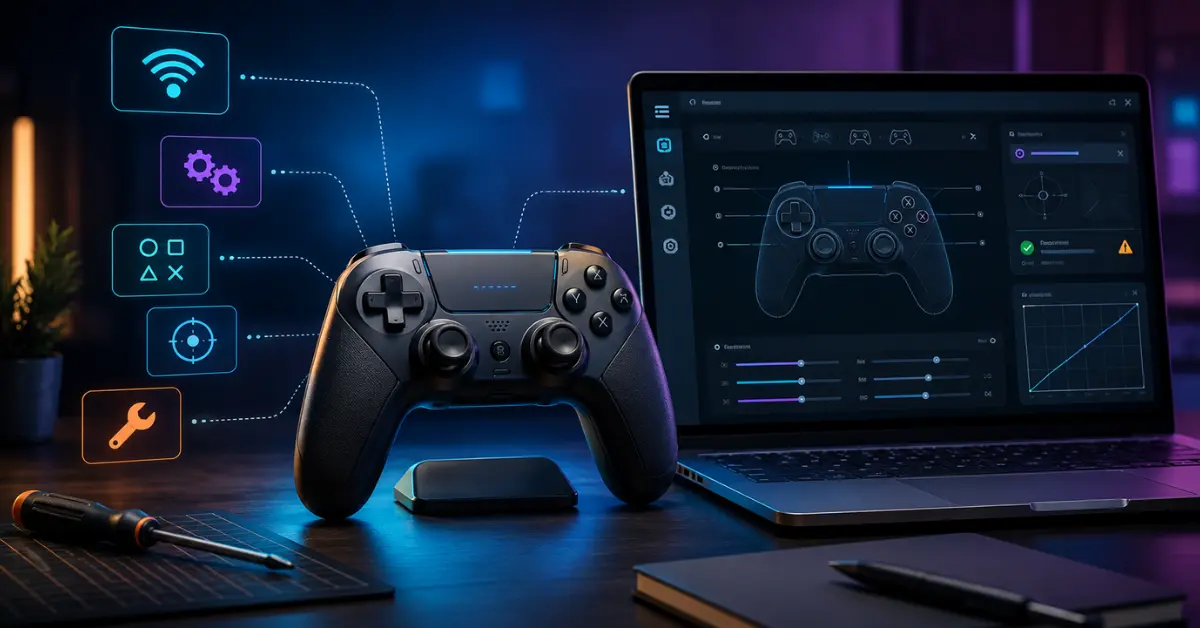
When it comes to gaming, a quality gamepad can enhance the experience by making it more comfortable, responsive, and enjoyable, especially in games that require precise movement, quick reactions, or complex controls. A tutorial guide for the hssgamepad approach can be helpful for players to learn how to setup the controller, how to configure its buttons and how to play and understand common issues.
Whether you are new to gamepads or already comfortable using controllers, learning how to configure and use your device properly can make a noticeable difference. A controller may work immediately after connecting it, but taking time to understand its settings can help you get better performance from it.
This guide teaches players the key points to factor in, including setup, assigning controls, maintenance and troubleshooting. The main objective is to maintain the simplicity and practicality for daily gaming.
Getting Started With Hssgamepad
The first step is ensuring that your gamepad will work with the game and device you are interested in. A controller could be wired or wireless (via USB or Bluetooth).
If the controller is wired, plug it into any available USB port. It may be detected automatically by your computer or game console. If the controller is not responding, checking the operating system’s device settings might help determine if the controller was detected correctly.
The wireless controllers are typically configured with a pairing. Power on the controller, put it into pairing mode (if needed), and pick it up from the list of Bluetooth-enabled gaming systems.
Test the basic game controls before launching a game. Test the analog sticks for proper movement, check if the buttons press down and triggers activate properly.
Also look to see if the game auto-teaches you the positioning of the controllers. Many games will have a controller option built into the game and some will need to be set up.
It is easy to save a bit of time in the beginning to check these details to avoid a lot of frustration in the end.
Understanding Controls and Customization
Once the controller is connected, the next step is understanding how its controls work.
Modern gamepads feature analog sticks, directional buttons, action buttons, shoulder buttons, triggers and menu buttons. Their general purpose is the same on all controllers but the way they are arranged may differ.
There are several games that give the user the ability to remap controls. This is particularly handy if you want to change from the default setting or if you find it uncomfortable.
A player that uses a specific action a lot, for instance, may wish to assign that action to a button that is more convenient to press.
The sensitivity settings can also affect gameplay. Analog stick sensitivity is the amount of motion that is reported when the analog stick is moved. Greater sensitivity may yield faster responses, and less sensitivity may yield more controlled movements.
No one setting fits all. The optimum setup will vary with the game and person playing it.
For competitive games the sensitivity setting may need to be tweaked down a bit, for more adventurous or strategy games, less sensitivity on input speed may be needed.
Don’t make all the changes at once—try them one at a time. Make one change, play it in a real match, and determine if another adjustment is needed.
Improving Your Gaming Experience
A controller is just a portion of an effective gaming setup. Your seating position, display, audio and environment can also have differences that make you feel more comfortable during longer sessions.
Avoid holding the controller too tightly and keep the controller away from your body. Unnecessary hand fatigue can be lessened through a relaxed grip.
Your body should be in a position where your arms and shoulders are fairly loose. Take rests and change your pose if you feel discomfort regularly during play.
There’s also the option to pair the controller’s settings with game settings. Set camera sensitivity, focus and settings, vibration, etc. to desired levels.
Vibration can be helpful for racing, action, and adventure games, but may not be desired in some cases for more consistent gameplay.
Other factors like frame rate and responsiveness of the display can also affect the sense of performance of the controller. Even if it is a good controller, if a game has performance issues, it can make anyone feel a bit flatter.
As far as competitive gaming is concerned, the stability of the performance and the settings are more important than constant changes.
Tips for Different Types of Games
Different genres place different demands on a gamepad.
In racing games, analog triggers are particularly useful because they allow players to control acceleration and braking more gradually. Learning to apply partial trigger pressure can provide greater control than simply pressing the trigger fully.
Action games often rely on quick combinations of buttons and stick movements. Practicing common sequences can make these actions feel more natural over time.
Platform games require accurate directional control. Players may benefit from becoming familiar with the sensitivity of the analog stick and using the directional pad when it feels more precise.
Sports games often involve many simultaneous commands. Custom button layouts can help place frequently used actions in more convenient positions.
First-person games may require careful attention to camera and aiming sensitivity. If your aim feels too fast, lowering sensitivity can make smaller adjustments easier. If turning feels slow, gradually increasing sensitivity may provide a better response.
The important point is that controller settings should serve the game rather than remain identical across every title.
Troubleshooting Common Gamepad Problems
Sometimes, controllers can have issues even if they are configured correctly.
A common problem is that the game does not recognise the controller. Always verify physical connection or wireless pairing. If the controller has a problem in one specific game, but not in other games, the problem could be related to the controller settings in the game.
Another annoying issue is input delay. Low battery life, interference, or a wireless connection failure can affect the responsiveness of wireless controllers. Sometimes, when the device goes back to the receiver’s field of view, the receiver can help.
The controller may be having stick drift if an analog stick is moving without being physically touched. First, see if the game includes a dead-zone adjustment. Sometimes a slight increase in the dead zone can help to minimize the effect, but it will not correct hardware wear.
If buttons do not register, repeatedly, it could mean that there is dirt or wear on the buttons or a hardware issue.
Don’t use too much force to unlock a jammed button. When basic cleaning doesn’t help, it may be safer to have the machine repaired or replaced than to try to do complicated hardware repairs without the proper knowledge.
Maintaining software and controller firmware updates may also be helpful if the manufacturer releases updates that will enhance the software’s compatibility or performance.
Maintaining Your Gamepad
Good maintenance can extend the useful life of a controller.
Keep the gamepad away from liquids, food, excessive dust, and extreme temperatures. Small particles can eventually interfere with buttons and analog controls.
Clean the exterior regularly with an appropriate dry or slightly damp cloth. Avoid applying liquid directly to the controller.
If the controller has removable components, follow the manufacturer’s instructions before taking anything apart. Opening a device unnecessarily can cause damage or affect warranty coverage.
Wireless controllers should also be charged appropriately. Avoid leaving batteries completely depleted for extended periods when the device uses a rechargeable battery.
Store the controller somewhere safe when it is not being used. Avoid placing heavy objects on top of it or leaving it where it could fall from a desk.
Cable management is important for wired controllers. Repeatedly bending or sharply twisting the cable near the connector can eventually damage it.
Small maintenance habits can prevent many avoidable problems.
Getting Better Through Practice
Controller customization can make gaming more comfortable, but settings alone do not create better gameplay.
Practice remains one of the most important parts of improving.
Spend time learning the basic movement and button combinations of each game. Instead of immediately focusing on advanced techniques, develop consistency with fundamental controls.
For games that require aiming, practice tracking moving targets and making small adjustments rather than relying entirely on rapid stick movements.
In racing games, practice braking points and smooth acceleration. In fighting games, repeat basic combinations until the movements become familiar.
Consistency is more valuable than constantly changing settings. Once you find a configuration that feels comfortable, use it for a while so your muscle memory can develop.
If you change sensitivity every few matches, it can become difficult to build reliable habits.
Recording gameplay can also help identify mistakes. Watching your own performance may reveal moments where poor positioning, delayed reactions, or unnecessary button presses affected the result.
The controller is a tool. The real improvement comes from learning how to use that tool effectively.
Final Thought
Getting the best out of your gamepad isn’t just about plugging it in, as a customised controller can make gaming more comfortable and responsive.
The tutorial guide hssgamepad approach is about understanding the complete process: checking compatibility, configuring controls, adjusting sensitivity, maintaining the device, solving common problems, and practicing consistently.
Start with basic settings and make changes gradually. Don’t assume that a popular configuration will suit your needs, focus on how each configuration will affect your gameplay.
Good maintenance is also crucial. Maintaining the cleanliness of the controller, protecting the cables, charging the battery in the correct manner, and resolving small issues as early as possible can increase the lifespan of the controller.
Ultimately, the best controller setup is the one that feels natural and allows you to concentrate on the game instead of the equipment. There are definitely some ways to make a comfortable set up that can help players practice and compete a bit better with a little experimentation.
FAQs
What is a tutorial guide hssgamepad?
A tutorial guide hssgamepad is a practical resource covering gamepad setup, controls, customization, troubleshooting, maintenance, and techniques for improving the gaming experience.
How do I connect a gamepad to a computer?
A wired controller can usually be connected through USB, while a wireless model may connect through Bluetooth or another supported wireless receiver. The exact process depends on the controller and computer.
Why is my gamepad not working in a game?
Check the physical connection or wireless pairing first. Then verify the game’s controller settings and confirm that the operating system recognizes the device.
What is controller stick drift?
Stick drift occurs when an analog stick registers movement even when it is not being touched. It can result from wear, contamination, or other hardware problems.
Should I change controller sensitivity?
You can adjust sensitivity if the default setting does not feel comfortable. Make small changes and test them before making additional adjustments.
How can I make my gamepad last longer?
Keep it clean and dry, avoid excessive force, protect cables from sharp bends, store it safely, and follow appropriate charging and maintenance practices.
Is a wired or wireless gamepad better?
Both have advantages. Wired controllers provide a direct connection and do not require battery charging, while wireless controllers offer greater freedom of movement. The better choice depends on your setup and preferences.
Can changing controller settings improve gaming skills?
Settings can make controls more comfortable and easier to manage, but they cannot replace practice. Consistent gameplay and learning the mechanics of a game remain essential for improving skills.
