

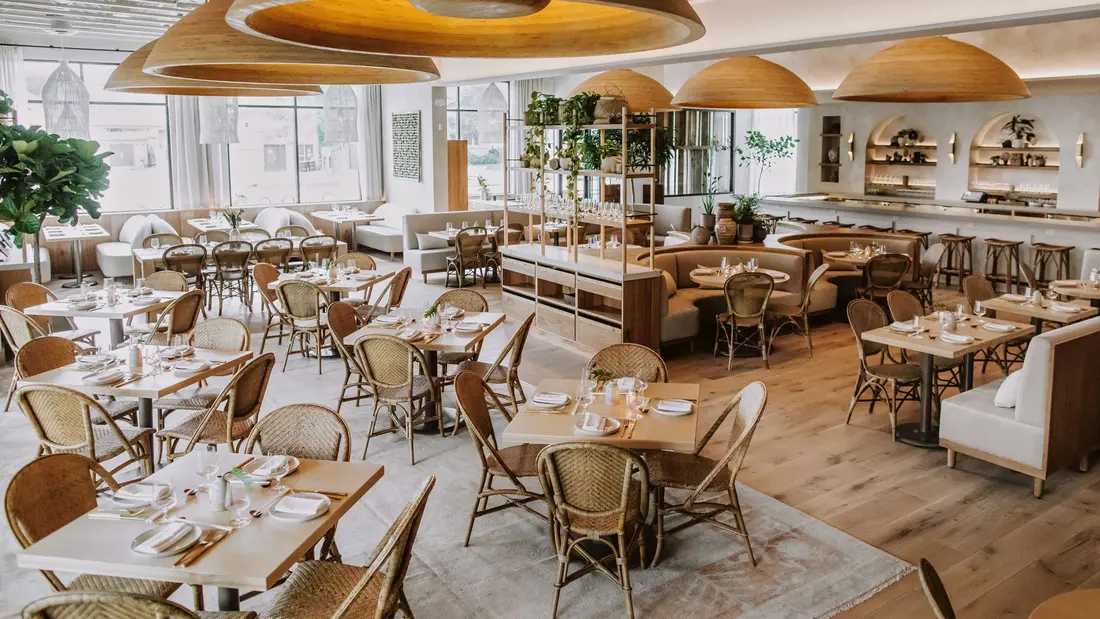
Every food business plan hits the same blank cell in the spreadsheet: furniture. The kitchen equipment has published prices, the lease has a signature, and then comes the dining room, where estimates online range from suspiciously cheap to alarmingly vague. First-time owners deserve real numbers, so here they are, category by category.
The short answer for a typical full-service room runs 300 to 600 dollars per seat all-in, meaning a 60-seat restaurant should budget 18,000 to 36,000 dollars for restaurant furniture at commercial grade. The long answer, the one that lets you build your own estimate line by line, is the rest of this guide.
Chairs: The Volume Line
Seating is the biggest count in the order, and commercial dining chairs price in clear tiers. Metal-frame workhorses run 60 to 120 dollars each. Solid wood chairs run 90 to 180. Upholstered versions add 30 to 60 dollars over their base models, and armchairs command another premium while consuming more floor space.
For a 60-seat room, the chair line alone lands between 4,000 and 10,000 dollars. Resist the residential shortcut here hardest of all, because chairs take the worst abuse in the building and cheap ones fail first and most visibly.
Tables: Tops, Bases, and the Real Math
Commercial tables sell as separate tops and bases, and the pairing prices the line. Laminate tops with standard cast-iron bases assemble a two-seat table for 150 to 250 dollars and a four-top for 200 to 350. Solid wood lifts each figure by half. Butcher block sits between.
A 60-seat room mixing deuces and four-tops typically needs 18 to 22 tables, landing the line between 4,000 and 8,000 dollars. Spend extra on bases before tops; guests forgive a plain surface and never forgive a wobble.
Booths: The Premium Zone
Booths are priced by the linear foot or by the unit, and they are the high end of the fit-out: 300 to 600 dollars per seat installed, about twice the cost of chair seating. Four double booths, seating 16, can devour 5,000 to 9,000 dollars.
The premium buys the most wanted seats in the room and the most revenue per section, so the line usually earns its spot. Budget rooms can phase booths into year two. The walls will wait.
Bar and Outdoor: The Two Specialty Lines
Bar stools follow chair pricing plus a third: commercial-grade backed stools run 90 to 200 dollars each. A 10-seat bar adds 1,000 to 2,000 dollars.
Outdoor seating is its own discipline, weather-rated aluminum and resin at 80 to 200 dollars per seat, and the mistake to avoid is furnishing a patio with indoor product, which one monsoon season converts into scrap. If the concept includes 20 outdoor seats, add 2,500 to 4,500 dollars and buy once.
The Lines Everyone Forgets
The order that arrives exactly on budget forgot something. The complete budget carries five small lines that surprise first-timers:
- Freight: 5 to 10 percent of the furniture subtotal, palletized and scheduled.
- Host stand, wait stations, and highchairs: 1,000 to 2,500 dollars combined.
- Spares: 5 percent extra units for instant replacement matching.
- Assembly labor: a real day of staff time, or a hired crew.
- Floor protection: glides and pads, trivial in cost, priceless on wood floors.
Together these add 10 to 15 percent to the visible subtotal. Write them in from the start and delivery week stays calm.
A Worked Example
Pull the lines together for a concrete 60-seat, full-service build at mid-range spec: chairs 6,500, tables 5,500, one booth run 6,000, 8 bar stools 1,200, entry and service pieces 1,500, spares and freight 2,300. Total: about 23,000 dollars, or 380 per seat, squarely inside the benchmark range.
Treat the figure as capital expenditure rather than decorating spend, because that’s what it is: a 7-to-10-year asset producing revenue nightly. Annualized, the whole dining room costs less than most rooms spend on marketing, and it works every single service.
Where to Cut and Where Never To
Every first build trims something, so trim in the right order. Safe cuts: laminate over wood tops, phasing the booth run, simpler chair styles in back sections. Never-cuts: commercial grade itself, base quality, outdoor ratings on outdoor product, and the spares line.
The budget’s guiding rule fits in one sentence: buy the boring strength everywhere guests touch, and save on surfaces they merely see. Rooms built on that rule open on budget and stay off the replacement treadmill.
The Number That Buys a Decade
So what is the price of furnishing a restaurant? For most full-service rooms: 300 to 600 dollars per seat, 10 to 15 percent logistics on top, and the discipline to spend it at commercial grade once, not retail grade twice.
Put the honest number in the blank cell and it stops being scary. It becomes what every good line item should be: a decision that is taken once, documented, and quietly earns its keep every night the doors open. Every journey begins with a plan and a budget, and this one now has both in hand.
