

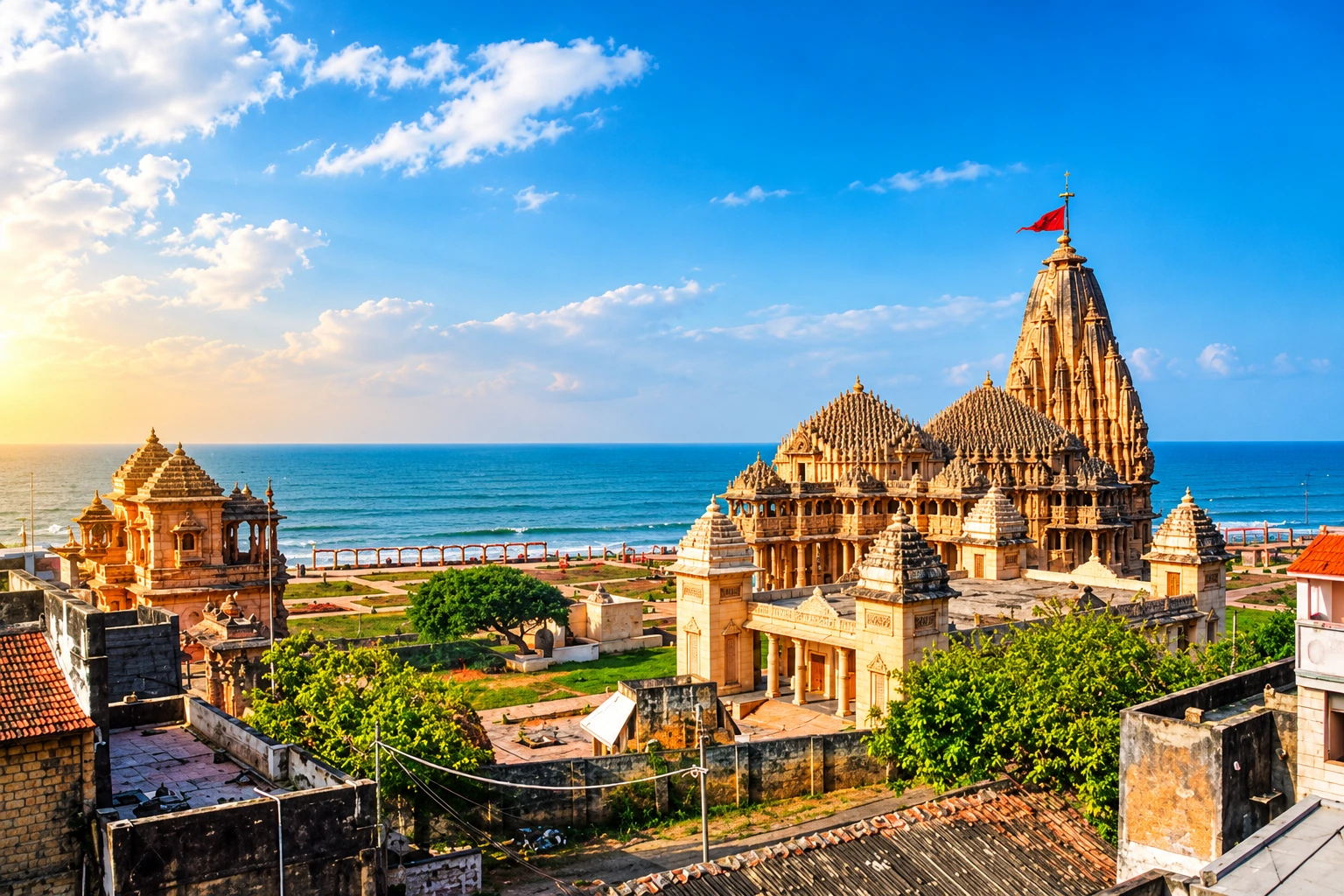
On April 1, 2025, liquor shops and bars closed their doors across 19 religious places in Madhya Pradesh. According to AIR News, the state’s cabinet approved the decision at a meeting in Maheshwar in January, and the Chief Minister described it as a “historic step toward preserving the sanctity of religious places.” Ujjain, Omkareshwar, Orchha and Chitrakoot were among the towns on the list.
Eighteen months later, a short video from Tirupati showed how seriously some temple towns now take the issue. The Free Press Journal reported on October 12, 2026 that passengers were filmed emptying alcohol bottles into a roadside gutter just before the Sapthagiri checkpoint, also known as the Alipiri checkpoint, on the road up to Tirumala. The clip spread quickly online, and some viewers commented that pilgrims who cannot set aside a habit for a few days should rethink the trip.
Behind these headlines sits a quieter, more personal story. Some pilgrimage traditions already ask devotees to give up alcohol, and for some families the question of drinking is not a rule at a checkpoint but a struggle at home. For some, a pilgrimage or vow is a starting point, while others need medical help, from local de-addiction centers to quieter recovery at a luxury rehab. This guide looks at where the rules have changed, what they mean for your visit, and how to approach the subject with care.
Madhya Pradesh Declares 19 Places “Completely Sacred”
The Madhya Pradesh order is one of the broadest of its kind. AIR News reported that the ban covers the urban limits of 13 towns: Ujjain, Omkareshwar, Maheshwar, Mandleshwar, Orchha, Maihar, Chitrakoot, Datia, Panna, Mandla, Multai, Mandsaur and Amarkantak. It also applies within six gram panchayats: Salkanpur, Kundalpur, Bandakpur, Barmankalan, Barmankhurd and Linga.
In the urban areas, all liquor shops and bars were required to close. In the listed gram panchayats, AIR News described a total liquor ban. The government declared these areas “completely sacred,” and the stated aim was to discourage drinking in places of worship and spiritual significance.
For pilgrims, this means that a visit to Mahakaleshwar in Ujjain, the Omkareshwar Jyotirlinga, or the ghats of Maheshwar now takes place in towns where alcohol is no longer sold over the counter. The AIR News report did not spell out rules on private possession or penalties, so travelers should check with local authorities if they are unsure.
Tirumala: An Old Rule That Is Still Being Tested
Tirumala has long been treated as an alcohol-free zone. The Free Press Journal noted that carrying or consuming liquor is prohibited under the rules governing the temple area, that vehicles and pilgrims are checked before they go up the hill, and that prohibited items may be confiscated.
Tirumala Tirupati Devasthanams (TTD) restated its position in August 2026. Deccan Chronicle reported on August 16, 2026 that TTD described alcohol, smoking and intoxicating substances as “strictly prohibited at Tirumala,” as well as at Alipiri, Srivari Mettu and other TTD premises. The statement came after a video showed a man smoking on the Alipiri footpath, and TTD said it would file a police complaint and take “strict legal action” against those who break its regulations.
Why the Checkpoint Matters
The Alipiri checkpoint is the main security point between Tirupati town and the hill shrine. For pilgrims, the practical lesson from the recent videos is simple. Anything that is not allowed on the hill should be left behind before the journey begins, not discarded at the last moment.
Ayodhya and the Ram Path
Ayodhya has taken a more targeted approach. According to a PTI report published by The Week, the executive committee of the Ayodhya Municipal Corporation passed a resolution on May 1, 2025 to ban the sale of liquor and meat along a 14 km stretch of Ram Path, the road that links Ayodhya and Faizabad and on which the Ram temple stands. The same resolution banned advertising for paan, gutkha, bidi, cigarettes and innerwear. Mayor Girish Pati Tripathi said the committee acted “to maintain the city’s true religious spirit.”
Enforcement has drawn scrutiny. In June 2025, The Week reported that the Congress party alleged liquor shops were still operating near the Ram Path despite the ban. The state government did not immediately respond. For visitors, the takeaway is that rules on paper and conditions on the ground can differ, and it is best to follow the spirit of the rule either way.
What Pilgrims Should Keep in Mind Before They Travel
Alcohol rules in temple towns are not uniform. Some cover an entire municipal area, some apply to one road, and some, like Tirumala, are enforced at a gate. A little preparation saves embarrassment and shows respect for fellow devotees.
- Check the local rules: Madhya Pradesh’s ban covers urban limits in some places and entire gram panchayats in others, so the boundaries are worth confirming before you book.
- Leave alcohol at home: At Tirumala, pilgrims and vehicles are checked at Alipiri, and the Free Press Journal reported that prohibited items may be confiscated.
- Remember that smoking counts too: TTD’s August 2026 statement grouped smoking and intoxicating substances with alcohol as strictly prohibited on its premises.
- Talk to your group in advance: When traveling with relatives or friends, agree on the rules before the trip so no one is caught out at a checkpoint.
- Respect the purpose of the rule: Even where enforcement is patchy, as reports from Ayodhya suggest, the restrictions reflect what local communities and temple bodies have asked of visitors.
None of this is complicated. Treat a temple town the way you would treat the inner sanctum, and the rules tend to take care of themselves.
When a Vow Becomes a Turning Point
Abstaining from alcohol is already part of several pilgrimage traditions. Incredible India, the Ministry of Tourism’s official portal, notes that Sabarimala devotees “abstain from alcohol and non-vegetarian food and take a vow of celibacy 40 days before their pilgrimage.” For many people, this period of discipline is a meaningful part of the journey.
For others, it reveals something harder. A national survey, Magnitude of Substance Use in India, carried out for the Ministry of Social Justice and Empowerment and reported in February 2019, estimated that about 14.6 percent of people aged 10 to 75, roughly 16 crore people, were current alcohol users. According to Devdiscourse’s report on the survey, about 5.2 percent of Indians, more than 5.7 crore people, had harmful or dependent use, and only about 1 in 38 people with alcohol dependence had received any treatment.
Behind those figures are households across the country. If a relative finds the 40 days before Sabarimala, or a few days at Tirumala, unusually difficult, that may be a sign worth taking seriously rather than a matter of willpower alone. A doctor is a sensible first conversation. Faith and medical care do not have to compete, and a vow can sit alongside professional support.
Frequently Asked Questions (FAQs)
1. Which temple towns in Madhya Pradesh are covered by the liquor ban?
According to AIR News, the ban that took effect on April 1, 2025 covers the urban limits of Ujjain, Omkareshwar, Maheshwar, Mandleshwar, Orchha, Maihar, Chitrakoot, Datia, Panna, Mandla, Multai, Mandsaur and Amarkantak, along with six gram panchayats, including Salkanpur and Kundalpur.
2. What happens if I carry alcohol to the Alipiri checkpoint at Tirumala?
Vehicles and pilgrims are checked at Alipiri, and the Free Press Journal reported that prohibited items may be confiscated and that trying to evade checks can lead to possible legal consequences. TTD has said alcohol is strictly prohibited at Tirumala and on its premises.
3. Is the Ayodhya ban on alcohol citywide?
No. The May 2025 resolution by the Ayodhya Municipal Corporation applies to the sale of liquor and meat along a 14 km stretch of Ram Path, the road linking Ayodhya and Faizabad, as reported by PTI. Visitors should still avoid alcohol around temple areas out of respect.
