
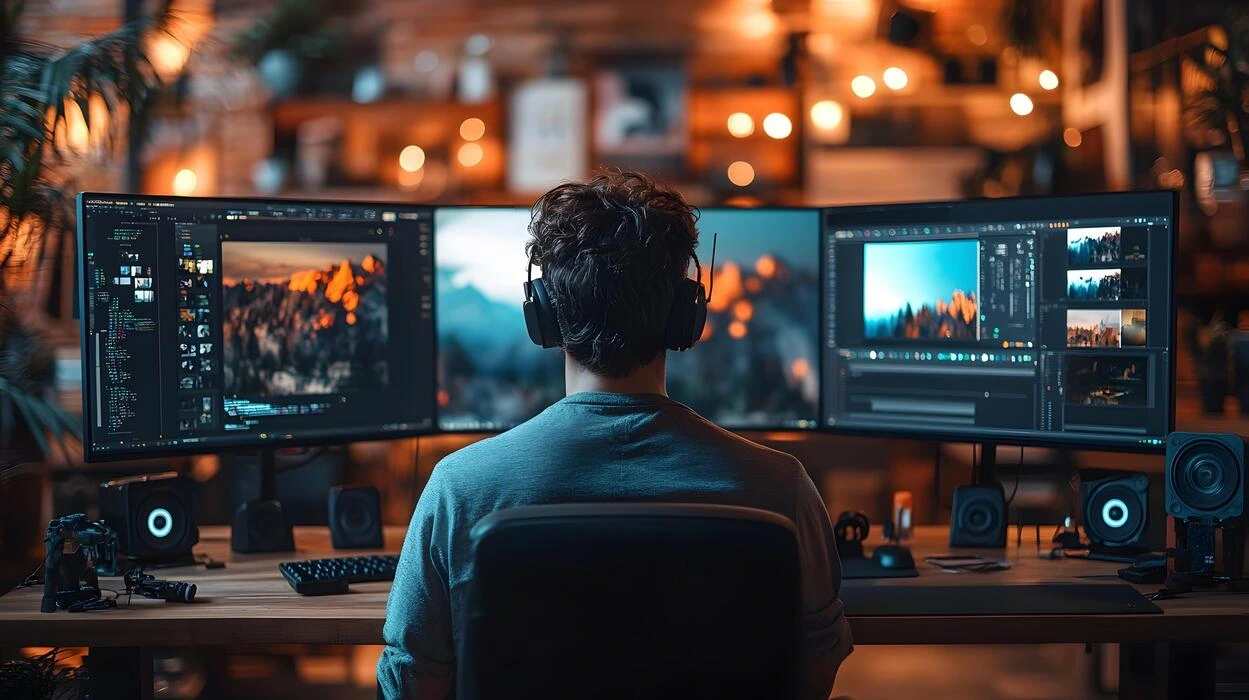
In today’s fast-moving digital world, good-quality visuals are no longer just nice to have. They are a must for creators, digital marketers, small business owners and everyday social media users. If you are making graphics for ads, improving pictures for your blog or creating thumbnails that grab attention, having tools that work quickly and smartly makes all the difference. Artificial intelligence has changed everything. What used to take hours of editing can now be done in seconds. The new tools are simple to use, accurate and intelligent. They cut out the parts and save time. No more struggling with software. Better results, faster.
Among the technological advances in how we see and work with images, tools like the Nano Banana 2.5 image editor are a big step forward. These tools make it easier for people to use, more accurate and more convenient overall. They take editing tasks and make them simple. AI-powered programs let anyone get high-quality results without needing to spend a long time learning complicated software. This change has made graphic design available to people. It lets artists of all levels create what they imagine with little effort
The Shift from Manual Editing to AI Precision
Traditionally, editing imagery was a complicated process. It needed a lot of know-how a great deal of patience, and expensive computer setups. Creators had to work through multi-layered projects. They used masking tools. They worked with colour grading curves. They made pixel-level changes. Even though professional desktop software is still strong for high-end movie work, it often has a learning curve. These programs cost a lot through subscription models. They also use much system power. This can slow down publishing jobs.
Artificial intelligence has changed all of this. It brings pattern recognition. It enables background separation. It uses dynamic enhancement algorithms. Modern editing platforms look at an image as soon as it is uploaded. They understand where objects are placed. They read lighting conditions. They see textures. Focus, on the subject. This lets users do changes—like removing objects precisely correcting colours and boosting resolution—with just a few clicks. Because of this, tasks that once took hours can now be done in seconds. Creators now have time to focus on strategy and storytelling.
Key Features That Define Advanced Image Editors
Modern graphic and photo enhancement tools aim to deliver results without losing the quality of the image. When looking at the visual creation software available today, a few important features are clear. These features are necessary for making content on different devices.
1. Smart Object Recognition and Cutouts
It used to be really hard. Took a lot of time to separate things from the background in graphic design. Now smart computer programs can find people, items, clothes and complicated details in the foreground. They make clean, soft edges really fast, without anyone having to draw it by hand.
2. Intelligent Colour and Light Balancing
Exposure is hard to get right when light changes, even for professional photographers. Automated balancing algorithms look at colour temperature, contrast ratio and harsh shadows to restore vibrancy and depth. They do this to correct washed‑out or underexposed shots so that exposure feels natural again.
3. Noise Reduction and Detail Enhancement
Cropping a picture or fixing digital photos often causes pixelation, blur and digital grain. Smart enhancement tools bring back missing details and clean up noise, making sure the image looks sharp even when it’s made bigger, for a desktop screen or printed in high resolution.
4. Creative Style Transfers and Filters
Beyond usefulness, creative editing depends a lot on artistic expression. In today’s world, creative editing tools offer filters and style overlays that smartly adjust to the real subject instead of simply layering a flat colour mask over the entire image. This shows how creative editing embraces expression rather than just utility.
How Creators and Marketers Benefit from Automated Editing
The addition of editing tools has a big effect on how well people work and how well their campaigns do in many different areas of the digital world:
E-Commerce and Product Photography: Online sellers need clear neat pictures of their products on plain backgrounds so customers feel confident buying. Automated editors help shop owners quickly process lots of product photos at once which saves time and keeps the look the same across all the websites where they sell.
Social Media Content Creation: Social media algorithms, like posts that come out often and look good to keep people interested. Quick editing tools help people make pictures and clean photos fast so they can post every day without getting behind.
Personal. Photography: People who take photos for fun or to keep family memories can easily make photo collections better fix small problems with the light or clean up pictures from trips without needing special design skills
Best Practices for Achieving Professional Editing Results
While such tools as AI can take care of most of the hard work, applying design principles will help to ensure that the end result looks appealing to the target audience:
Make sure to take high-quality images as a basis for editing: Even the most advanced technologies cannot fix poor lighting, focus, or other issues.
Try to avoid over-enhancing photos: This includes editing colours and saturation too much. After all, nothing looks more artificial than an unnaturally bright picture.
Do not forget about composition and framing: The subject of your photo should always be the center of attention and take up a considerable amount of space on the screen.
The Future of Digital Image Processing
I think machine learning algorithms keep getting hardware acceleration is getting faster so visual editing will become smoother more interactive and more personalized. The focus is steadily moving toward editing, generative fill capabilities and real‑time collaborative workflows where teams can co‑edit assets right away. Tools that blend speed, flexibility and high precision—such as the Nano Banana 2.5 image editor are paving the way, for a creative and inclusive digital ecosystem where anyone can turn their visual ideas into reality easily. .
